

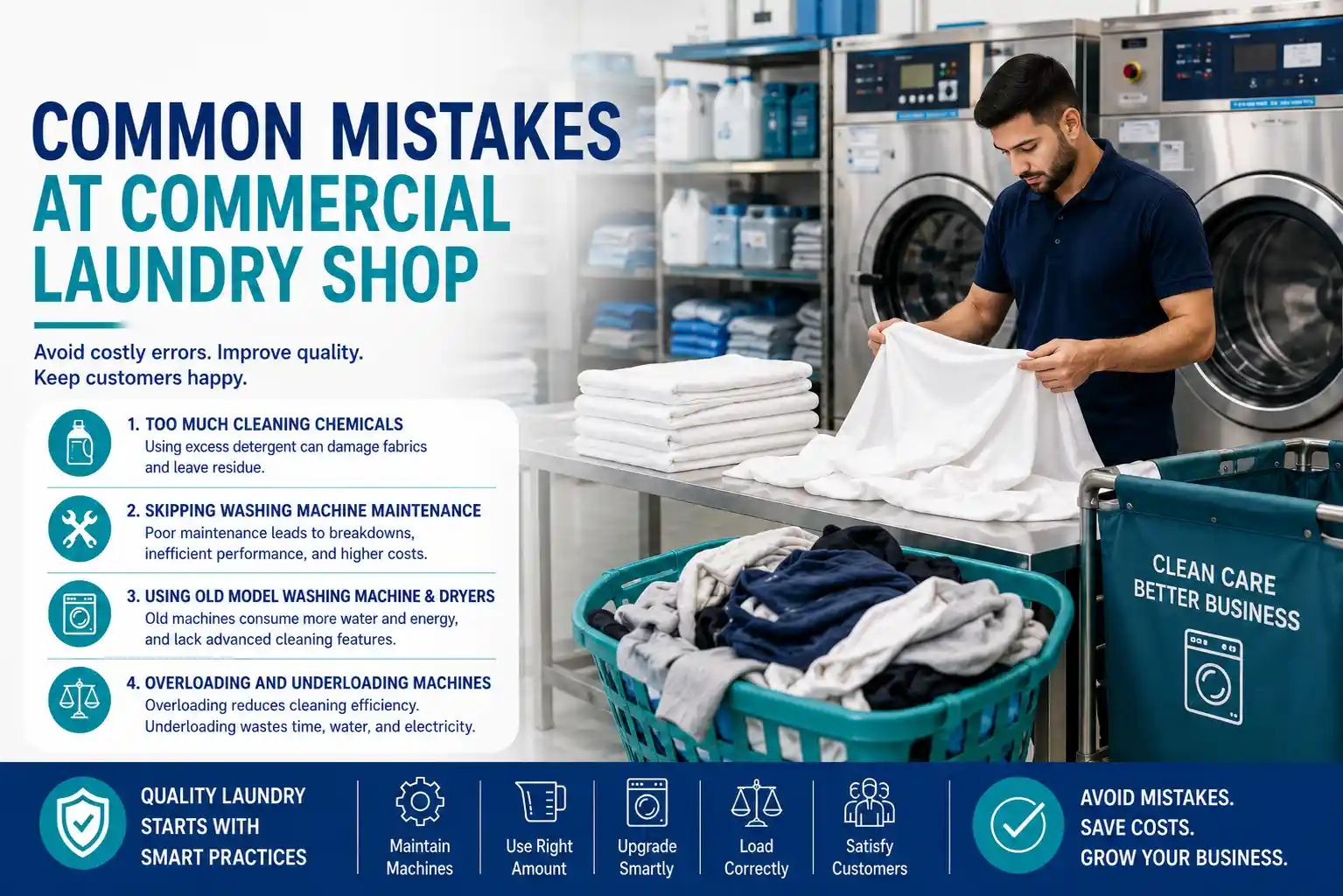
Commercial laundry shop mistakes can have a significant impact on operating costs, garment quality, equipment performance, and customer satisfaction. Although laundry businesses handle large volumes of clothing every day, even experienced laundry operators can make mistakes that affect efficiency and profitability.
From using too many cleaning chemicals to overloading washing machines and delaying equipment maintenance, small operational mistakes can quickly become expensive problems. Understanding these common mistakes can help commercial laundry businesses improve their processes, protect customer garments, and maintain consistent cleaning results.
In this guide, we’ll look at some of the most common commercial laundry mistakes and practical ways to avoid them.
1. Using Too Many Cleaning Chemicals
One common mistake in commercial laundry operations is assuming that using more detergent or cleaning chemicals will result in cleaner garments. In reality, excessive detergent does not necessarily improve cleaning performance.
Using too much detergent can leave residue on fabrics, make rinsing more difficult, and potentially affect the color, texture, and overall appearance of garments. In a
commercial laundry shop
,
this can become a serious issue because customer satisfaction depends on consistent and high-quality results.
Always measure detergents and other laundry chemicals according to the manufacturer’s recommended dosage, garment type, load size, and level of soiling.
2. Skipping Washing Machine Maintenance
Commercial washing machines often operate continuously, especially in busy laundry facilities. Because of the demanding workload, maintenance can easily be overlooked.
However, skipping routine washing machine maintenance can lead to poor cleaning performance, unpleasant odors, equipment problems, and unexpected downtime. A poorly maintained machine may also affect the quality of every laundry load processed through it.
How to Prevent Maintenance Problems
✅ Clean the washing machine regularly.
✅ Check filters, drains, seals, and other important components.
✅ Follow the manufacturer’s maintenance schedule.
✅ Report unusual noises, leaks, or performance issues immediately.
Making machine cleaning part of the operator’s regular shift routine can help prevent small problems from becoming expensive equipment failures.
3. Continuing to Use Old Washing Machines and Dryers
Keeping older laundry equipment may seem like a way to avoid a large replacement expense. However, older washing machines and dryers can become less efficient and more expensive to operate over time.
Newer commercial laundry equipment often includes improvements in water usage, energy efficiency, cycle control, capacity, and overall performance. While purchasing new equipment requires an initial investment, improved efficiency can help reduce operating expenses over the long term.
Some commercial laundry businesses also use a
top loader washing machine
for specific garment types or lighter laundry loads. The important factor is choosing equipment that matches your workload and maintaining it properly.
Evaluate equipment based on total operating costs, including water, electricity, maintenance, downtime, and productivity—not just the original purchase price.
4. Overloading Washing Machines
Overloading a commercial washing machine is another common laundry mistake. It may seem efficient to process as many garments as possible in one cycle, but an overloaded machine may not clean clothes effectively.
Washing machines require sufficient space for garments to move freely through the wash cycle. When the drum is packed beyond its recommended capacity, water and detergent may not circulate properly, reducing cleaning performance.
Problems Caused by Overloading
⚠️ Poor cleaning results
⚠️ Uneven distribution of detergent
⚠️ Increased stress on machine components
⚠️ Longer drying times
⚠️ Greater risk of customer complaints
Always follow the manufacturer’s recommended load capacity and adjust loads according to fabric type and garment requirements.
5. Underloading Washing Machines
While overloading is a major problem, consistently underloading commercial washing machines can also reduce operational efficiency.
Running small loads unnecessarily can waste water, electricity, detergent, labor, and valuable machine time. For a high-volume commercial laundry business, these additional costs can accumulate quickly.
Aim for appropriately sized laundry loads rather than simply maximizing or minimizing the amount of clothing in every cycle.
6. Ignoring Garment Type and Care Requirements
Not every garment should be processed using the same washing cycle, temperature, detergent, or drying method. Treating every load identically can result in fabric damage, color fading, shrinkage, or reduced garment lifespan.
Commercial laundry operators should separate garments according to factors such as fabric type, color, level of soiling, washing temperature, and care-label instructions.
- Check garment care instructions.
- Separate colors and fabric types where appropriate.
- Choose the correct wash temperature.
- Select an appropriate detergent and cycle.
- Use the correct drying method for the fabric.
7. Failing to Monitor Operating Costs
Commercial laundry businesses operate on tight margins, which makes cost control extremely important. Water, electricity, detergent, labor, repairs, and equipment downtime can all influence profitability.
Failing to monitor these expenses can make it difficult to identify where money is being wasted. Regularly reviewing utility consumption, chemical usage, machine performance, and maintenance costs can help laundry operators identify opportunities for improvement.
Track These Important Metrics
📊 Water consumption per load
⚡ Electricity consumption
🧴 Detergent and chemical usage
🔧 Maintenance and repair expenses
⏱️ Machine downtime
👕 Laundry volume processed per day
Final Thoughts
Running a commercial laundry shop efficiently requires more than simply washing and drying large quantities of clothing. Small operational mistakes can lead to fabric damage, equipment breakdowns, higher utility bills, unnecessary chemical usage, and unhappy customers.
By using the correct amount of cleaning chemicals, maintaining washing machines and dryers, replacing inefficient equipment when necessary, and optimizing every laundry load, businesses can improve productivity while controlling operating costs.
Most importantly, commercial laundry operators should regularly review their processes and look for opportunities to improve. Preventing avoidable mistakes today can help protect equipment, maintain consistent laundry quality, satisfy customers, and support long-term business growth.
Frequently Asked Questions About Commercial Laundry
What are the most common commercial laundry mistakes?
Common mistakes include using too much detergent, skipping equipment maintenance, using inefficient older machines, overloading or underloading washing machines, ignoring garment care requirements, and failing to monitor operating costs.
Why should commercial washing machines not be overloaded?
Overloading can prevent garments from moving freely during the wash cycle. This can reduce cleaning performance, affect detergent distribution, increase machine stress, and potentially lead to unsatisfactory laundry results.
How often should commercial washing machines be maintained?
Commercial washing machines should receive routine cleaning and inspection according to the manufacturer’s recommendations and the workload of the laundry facility. Daily cleaning tasks combined with scheduled professional maintenance can help keep equipment operating efficiently.
Does using more detergent make clothes cleaner?
Not necessarily. Using excessive detergent can leave residue and may negatively affect fabrics. Commercial laundry operators should use the recommended amount based on the load, detergent type, water conditions, and manufacturer’s instructions.